
 Assembly, integration and test (AIT) > Testing solutions > Coefficient of Moisture Expansion (CME)
Key highlights
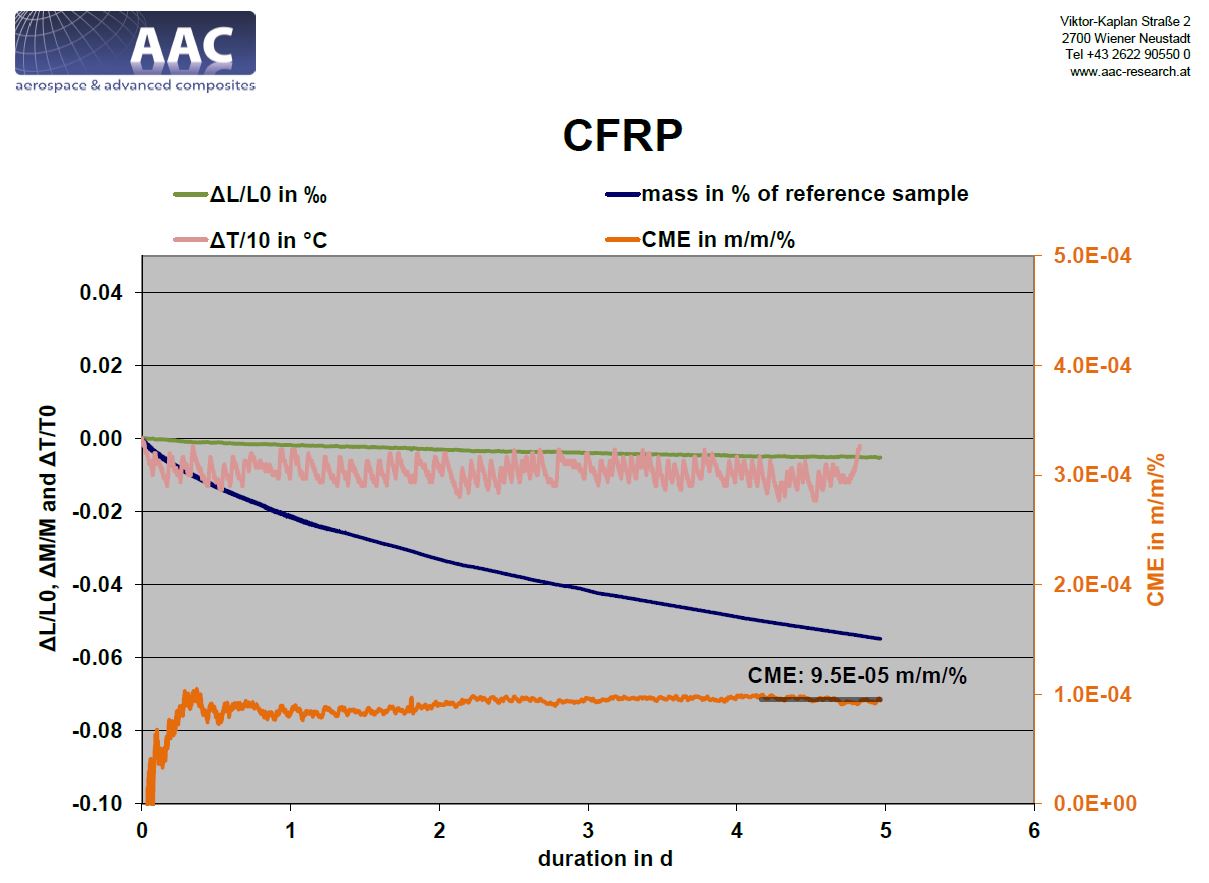
For the determination of the Coefficient of Moisture Expansion (CME) the mass loss and the change of length has to be measured with high accuracy. The ratio of length to mass variation by moisture absorption or evaporation is the CME in m/m/wt% H2O.
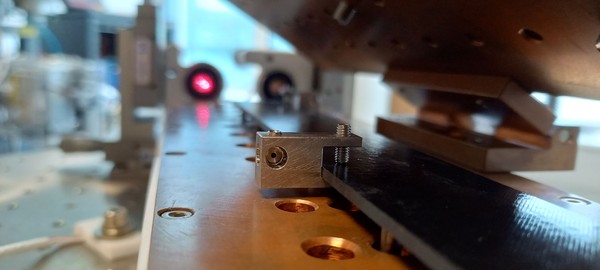
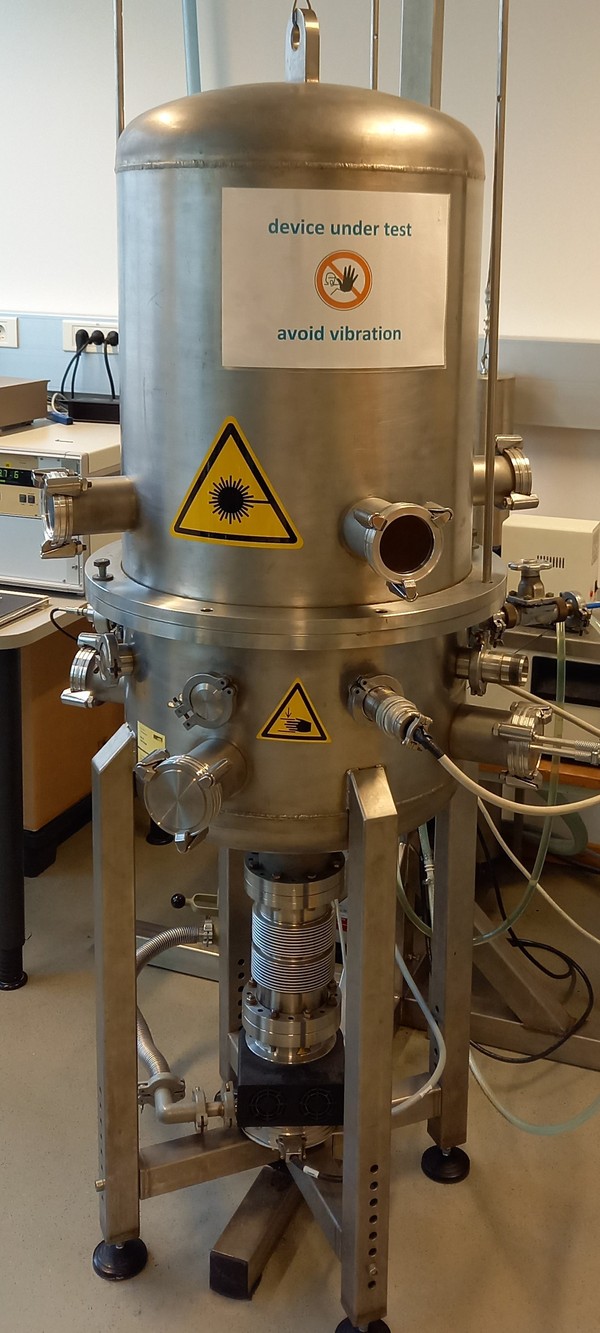
The main advantage of AAC CME test method is a highly accurate measurement within some days of a process, which takes typically weeks or months. AAC measures the mass loss in vacuum with an accuracy of 1 µg (Advanced Outgassing Test Rig) and the length change with an accuracy of 10nm. Both measurements are done in vacuum and are therefore close to real space conditions.
Applications
Beside the CTE, CME is an important factor to evaluate for CFRP / GFRP materials in space. The resin-fibre composite materials tend to trap humidity in air, which is released in vacuum and causes dimensional changes of the material. CME measurements determine the length change of materials due to water release.
Key features
For the measurement of CME two samples per material are needed:
sample dl: 30mm x 150mm (measurement in direction of 150mm)
sample dm: 20mm x 50mm
max thickness of samples: 4mm
Flight heritage
CME measurements are done at AAC since the 1990s, when AAC was part of the Austrian Institute of Technology. Since then, the facility has been upgrade regularly to meet the rising needs of accuracy. Over the last decades AAC has gained a lot of experience in CME testing.
Testing & qualification
AAC is audited according to ISO 9001.
Distributors
AAC headquarter is located in Austria, close to Vienna.
Disclaimer: satsearch is not responsible for any mistakes on this page, although we do our best to ensure correctness. Please report any mistakes to us.
Last updated: 2025-03-11

Export

