
 Assembly, integration and test (AIT) > Electrical ground support equipment (EGSE) > LVDS Front-End


Key highlights
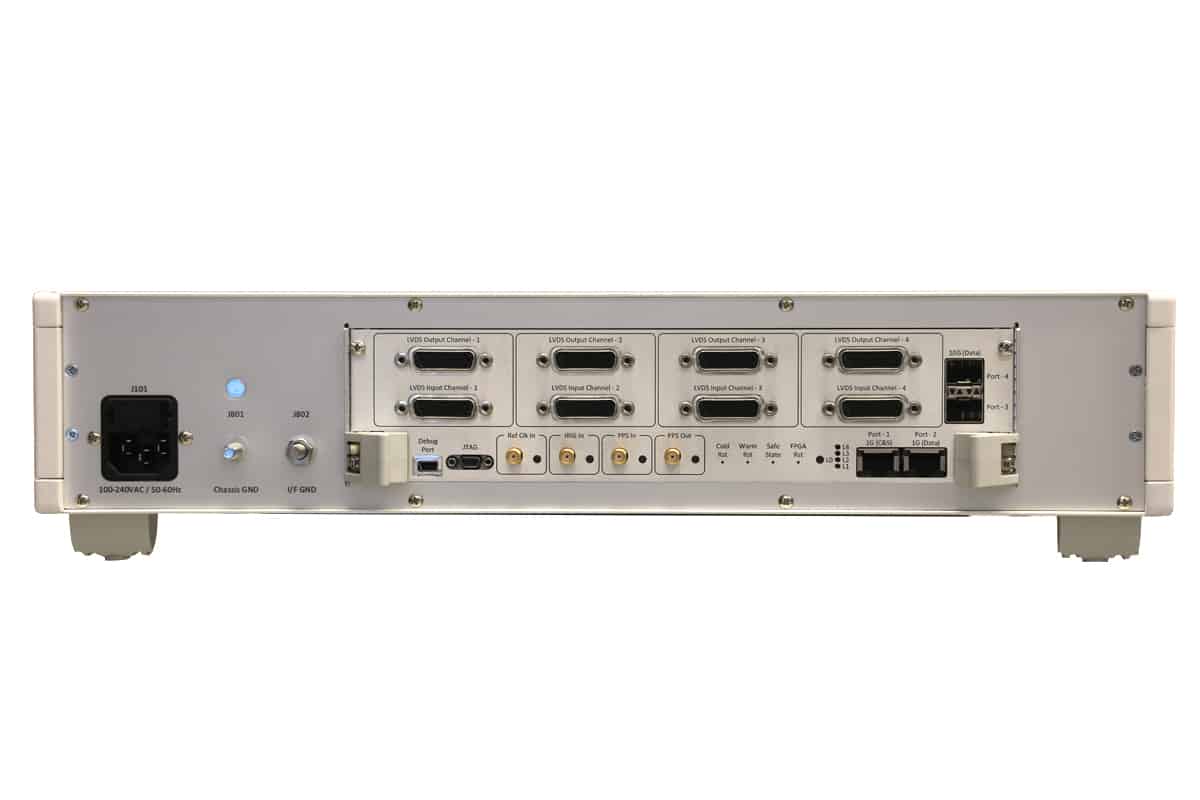
The LVDS Front-End provides the Low-voltage differential signalling (LVDS) Data/Clock interfaces (electrical and protocol) to satellite flight equipment and can be used on all assembly, integration and testing (AIT) levels (bread-boarding, module, unit, instrument, panel and satellite).
Typically, the LVDS Front-End is connected to Payloads, Mass Memory Units, Laser Communication Terminals and RF Transponders.
The LVDS Front-End can operate as data source (transmit), data sink (receiver) or both at the same time.
Key features:
- Up to 4 Parallel LVDS Inputs and 4 Parallel Outputs (8-bits Data and Clock)
- Up to a data rate in excess of 1Gbps per channel in each direction in 8- bit mode
- Teaming of 2 channels (inputs or outputs) to 16-bit Parallel Interfaces
- TIA/EIA-644-A Compliant LVDS Interfaces
- Input clocking in excess of 125MHz
- Output clock programmable down to 1MHz and in excess of 125MHz in 1Hz steps
Celestia STS LVDS Front-End is the second generation of LVDS EGSE released in Q4 2018, since release of the first generation in 2010. Previous generations have been used one wide range of programs (ESA and non-ESA), such as Sentinel-1, SeoSAT, EarthCare and various commercial programmes and delivered to major European prime contractors such as Airbus and Thales Alenia Space.
Disclaimer: satsearch is not responsible for any mistakes on this page, although we do our best to ensure correctness. Please report any mistakes to us.
Last updated: 2019-07-27
LVDS Front-End

Export

