
 Satellite and CubeSat thrusters > 22N HPGP Thruster
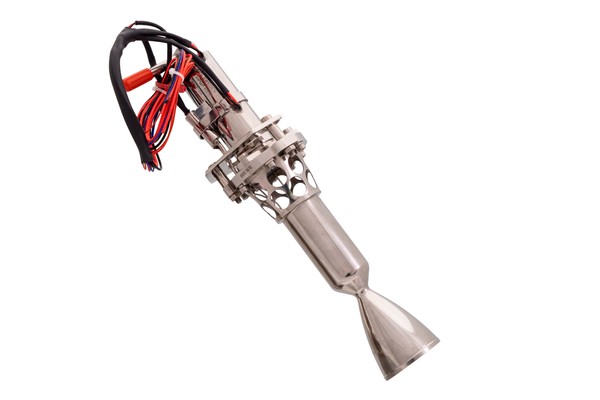
Key highlights
ECAPS's 22N HPGP Thruster is designed for attitude, trajectory and orbit control of larger satellites and for systems such as propulsive payload adaptor rings.
- Non-toxic propellant makes for easier and less costly integration on secondary or ‘piggy-back’ missions.
- Propellant loading is simple, fast and avoids the cost associated with loading hydrazine. Allows the operator to spend less time on ground operations and more time on space operations.
- ‘Fuel at the factory’ – be ready for launch vehicle integration upon arrival at the launch pad.
- Non-toxic propellant makes payload adaptor rings suitable for a new class of small satellite launchers, where handling hazardous hydrazine may impede operations or where fully equipped hydrazine processing facilities may be non-existent.
- Higher performance over hydrazine allows for more payload or longer mission durations.
- Allows for more secondary or ‘piggy-back’ launch opportunities, especially missions where there is concern about the hazards of hydrazine and its risks to the primary payload.
- Allows for more capable missions than spacecraft without propulsion.
- Allows for more agile mission profiles than electric propulsion. Spacecraft take significantly less time to execute maneuvers and orbit changes.
Disclaimer: satsearch is not responsible for any mistakes on this page, although we do our best to ensure correctness. Please report any mistakes to us.
Last updated: 2025-12-17

Export

