
 Sun sensors > Eagle - Miniature Digital Dual-axis Fine Sun Sensor
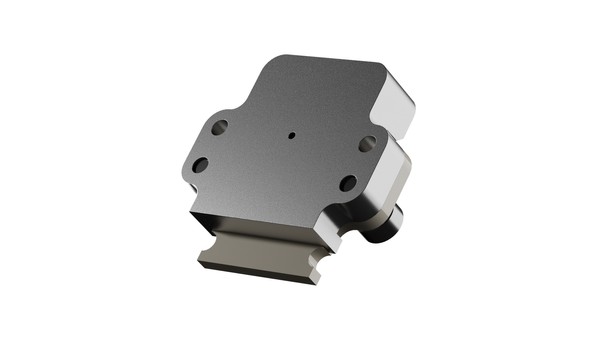
Key highlights
Eagle is a reliable, miniature digital dual-axis fine sun sensor for CubeSats.
- Dual-axis performance: <±0.15° (3σ) accuracy and 0.09° (1σ) precision.
- Ultra-compact + light: 15 × 15.5 × 4.6 mm, 3 g (incl. ribbon cable).
- Very low power: 0.007 W at 2.6-3.5 V.
- Wide FOV: 110° × 110° with partial albedo detection.
- Simple avionics integration: I²C with CSP support (I²C peripheral mode available).
- Long-duration reliability: Eagle heritage since 2017; longest deployment 4.5 years fully functional on orbit.
- Integration package: extensive documentation plus reference Python scripts to speed up bring-up and testing.
- Optional bus simulator (€300/unit): full communications + health telemetry without the optical detector; intended for early software development in an office environment.
Designed, developed and manufactured in the European Union.
Applications
- Fine sun-vector input for ADCS: sun pointing, momentum management, detumbling support, and safe-mode pointing.
- Constellation and volume programs where low power, repeatable calibration, and short lead times reduce integration risk.
- Drones, rovers, balloons.
Key features
Eagle is a digital dual-axis fine sun sensor for CubeSat ADCS designs where surface area, volume, and power are limited.
Performance
- 110° × 110° FOV with <±0.15° (3σ) accuracy and 0.09° (1σ) precision.
- 10 Hz update rate suitable for sun-pointing and safe-mode control loops.
Electrical & software integration
- I²C interface supporting CSP messaging or I²C slave mode.
- Digital output intended to minimize analogue design effort and simplify flight software integration.
Low SWaP
- 0.007 W power consumption on 2.6–3.5 V supply.
- 15 × 15.5 × 4.6 mm and 3 g (incl. ribbon cable) for dense CubeSat accommodations.
Robustness
- Partial albedo detection to improve robustness against Earth-reflection effects.
- Environmental capability includes thermal-vac cycling and radiation tolerance per qualification section.
Customization
- Calibration delivered per unit: Eagle/Eagle Plus sensors are individually characterized and delivered with a calibration matrix.
- Calibration granularity options: calibration available with 10°, 5°, 2° or custom angular step options (project-dependent).
- Integration adaptations on request: mechanical/electrical tailoring, interface and form-factor adaptations, and custom engineering support are available via quotation.
Flight heritage
Needronix sun sensors have established in-orbit heritage: Eagle flight heritage since 2017 with a longest deployment of 4.5 years fully functional on orbit.
As an example reference mission, the GRBAlpha CubeSat (2021–2025) used multiple Needronix Eagle sun sensors and Cormorant transceivers lasting 4.5 years of continuous operation and all components functional throughout the mission.
Manufacturing
Eagle sensors are tested and calibrated in Needronix’s in-house facility, including a test facility co-developed with ESA. Sensors can be individually characterized and delivered with a calibration matrix, supporting consistent integration and reducing system-level commissioning effort.
Testing & qualification
- Thermal: operating −45 °C to +85 °C.
- Thermal-vacuum cycling: 100 cycles, −70 °C to +110 °C.
- Radiation tolerance: > 20 krad(Si).
Needronix follows an ECSS-based development approach and performs unit-level verification and validation, including test and calibration, to support repeatable on-orbit performance.
Export control
This product is subject to EU export control rules. Shipments outside the EU may require authorization depending on destination, end user, and end use. Needronix will support the export authorization process as applicable and may request end-use/end-user information during ordering.
Disclaimer: satsearch is not responsible for any mistakes on this page, although we do our best to ensure correctness. Please report any mistakes to us.
Last updated: 2026-02-21

Eagle - Miniature Digital Dual-axis Fine Sun Sensor
list price: 1,600 EUR - 2,100 EUR
lead time: < 7 wk
Technical specs
Export

