
 Integrated satellite payloads > Lab2Space Demonstrate — Orbital Technology Demonstration
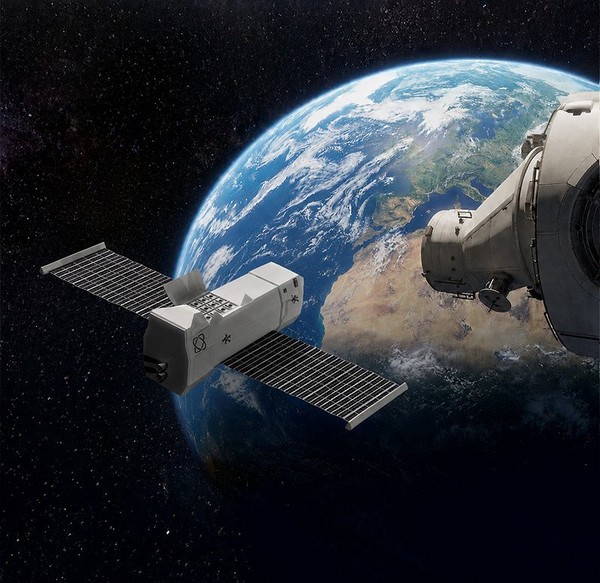
Key highlights
- Orbital technology demonstration for experiments and payloads requiring real spaceflight experience.
- Payload User Housing (PUH) provides a defined interface for customer experiments and payloads.
- Spline-compatible architecture provides continuity with the Lab2Space Explore and Validate pathways.
- Managed payload integration from payload preparation through orbital deployment and demonstration.
- Defined demonstration objectives and success criteria established before flight.
- In-orbit performance data provides evidence of technology performance in the space environment.
- TRL advancement and flight heritage can support subsequent development, investment and mission opportunities.
- Designed to support commercial, research and university technology developers progressing toward operational space applications.
Applications
Lab2Space Demonstrate is intended for technologies that have progressed beyond laboratory or ground validation and require in-orbit demonstration to establish performance in the space environment.
Applications include:
- Earth observation and remote sensing payloads
- Space-based AI and data processing
- Sensors and instrumentation
- Communications technologies
- Navigation and positioning technologies
- Scientific experiments
- Environmental monitoring
- Defence and security technologies
- University and research payloads
- Emerging space technologies requiring flight heritage
The service is particularly suited to developers seeking to demonstrate a technology in orbit before progressing to a larger, more capable or operational mission.
Key features
Payload User Housing (PUH): Customer experiments and payloads are accommodated within a defined Payload User Housing designed to simplify integration into the demonstration platform.
Spline interface: The PUH connects to the Lab2Space Spline interface, providing a common mechanical and systems interface across the Lab2Space demonstration pathway.
Pathway continuity: Payloads can progress through the Lab2Space development pathway from Explore → Validate → Demonstrate, reducing the need to redesign the payload interface at each stage.
Orbital demonstration: Provides an opportunity to operate the technology in the actual space environment and generate flight performance data.
Demonstration planning: Mission objectives, technology objectives, operating parameters and success criteria are defined before flight.
Payload integration: Supports the process of preparing the customer payload for integration with the PUH and Spline architecture.
Mission coordination: Provides coordination across payload, integration and mission requirements.
On-orbit operation: Supports commissioning and execution of the technology demonstration following deployment.
Performance evidence: Demonstration results can provide evidence of technology performance under actual orbital conditions.
Flight heritage: Successful operation can establish documented spaceflight heritage that supports subsequent technology development and mission opportunities.
TRL advancement: Demonstration results can contribute evidence for reassessment of the technology's Technology Readiness Level.
Scalable pathway: The approach is intended to support technologies progressing from research and development toward commercial and operational space applications.
Customization
Lab2Space Demonstrate is based on a standard Payload User Housing and Spline interface, with customer integration requirements assessed according to the experiment or payload.
Customization may include:
- Payload mechanical accommodation
- Electrical and data interfaces
- Payload operating requirements
- Thermal considerations
- Payload-specific testing
- Mission-specific demonstration objectives
- Data and operational requirements
The standard interface is intended to minimise unnecessary payload redesign while allowing appropriate mission-specific integration.
Additional engineering, testing or integration requirements may incur additional costs depending on payload complexity and mission requirements.
Flight heritage
Flight heritage information will be added as Lab2Space Demonstrate missions are completed and publicly releasable mission information becomes available.
Manufacturing
Lab2Space Demonstrate uses a standardized Payload User Housing and Spline-based integration architecture to simplify accommodation of customer experiments and payloads. The approach separates the customer payload from the primary spacecraft integration interface, supporting repeatable integration and reducing unnecessary payload redesign between demonstration environments.
Payload-specific mechanical, electrical, thermal and data-interface requirements are assessed as part of the mission integration process.
Testing & qualification
Qualification requirements are established according to the mission, payload characteristics, launch environment and spacecraft integration requirements.
Customer payloads are assessed against applicable mechanical, electrical, thermal, environmental, operational and safety requirements before integration.
Verification and testing requirements are defined as part of the payload integration and mission assurance process. The applicable qualification and acceptance test regime may vary according to the payload and mission profile.
Export control
Export-control requirements are assessed on a payload- and mission-specific basis. Customers are responsible for identifying and declaring applicable export-control restrictions associated with their payload, technology, data or components.
Lab2Space will assess applicable Australian and international export-control requirements as part of mission and payload integration planning.
Distributors
Not applicable.
Customers
Lab2Space Demonstrate is intended for space technology companies, research organisations, universities and payload developers seeking to demonstrate technologies in orbit and establish flight performance evidence and space heritage.
Customer and mission information will be published only where disclosure has been authorised.
Disclaimer: satsearch is not responsible for any mistakes on this page, although we do our best to ensure correctness. Please report any mistakes to us.
Last updated: 2026-09-23

Lab2Space Demonstrate — Orbital Technology Demonstration
Export

