
 Vehicle components > Exploding Foil Initiator
Key highlights
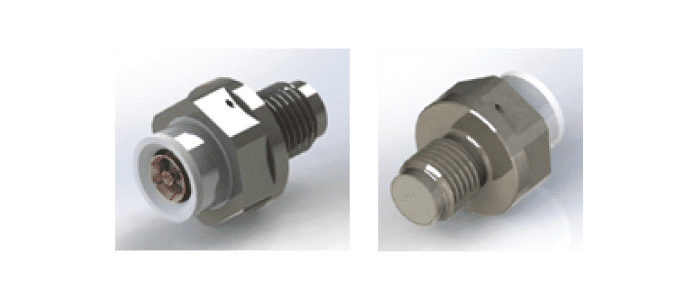
AN EXPLODING FOIL INITIATOR (EFI), ALSO KNOWN AS SLAPPER DETONATOR, IS USED TO PROVIDE RELIABLE IN-LINE INITIATION OF EXPLOSIVE TRAINS IN ORDNANCE SYSTEMS WITH A HIGH DEGREE OF SAFETY AND REPEAT-ABILITY.
HOW EXPLODING FOIL INITIATORS WORK
A high voltage pulse applied to the EFI provides the energy and shock needed to detonate insensitive secondary explosives, which further enhances their safety. An electrical stimulus in excess of 500 volts is required to function an EFI, providing enhanced safety in many critical applications, such as rocket motor ignition and warhead initiation. Function times are typically much less than one microsecond. The EFI is an improvement over the similar Exploding Bridge Wire (EBW) detonator with more efficient detonation transfer, lower voltage initiation, increased safety, and the ability to initiate a greater variety of insensitive explosives.
FUNCTIONS & APPLICATIONS
Functions
Electronic safe and arm systems are becoming accepted throughout the Space and Defense industry for rocket motor ignition, fuzing, and flight termination applications. These applications require safety sensitive initiation and use what is termed In-Line Initiators (ILI). ILI includes EFIs that are used for warhead initiation applications using detonating outputs and rocket motor ignition applications requiring deflagrating or pyrotechnic outputs. EFI detonators are also used to initiate the destruct mechanisms in flight termination system applications. Application definitions include:
ESAD or eSAD – Electronic Safe Arm Device
ESAF – Electronic Safe Arm Fuze or Electronic Safe Arm and Fire
ISD or eISD – Electronic Ignition System Device
FTS – Flight Termination System
Applications
Qualified to MIL-DTL-23659 Appendix A for use in our eISD, PacSci EMC exploding foil initiators can be found in missiles (from air-to-ground, air-to-air, surface-to-air, surface-to-surface), torpedoes (lightweight and heavyweight), underwater explosive ordnance disposal and precision guided munitions.
PERFORMANCE CHARACTERISTICS
Optimal Voltage: 1100 Volts nominal
All-Fire: 860 Volts at 0.999 reliability at 95% Confidence level
No-Fire: 500 Volts, 0.001 probability to fire at 95% SS lower confidence
Operating Temperature: -54°C to +71°C
Ordnance Output Deflagration – Tailored peak output pressure performance in 10cc closed bomb
Detonation – 0.010-inch dent depth in steel dent block
Thru-Bulkhead – Post-Fire Back Pressure >10,000 PSI
Applicable Specifications: Qualified to:
MIL-DTL-23659 Initiators, Electric, General Design For; Appendix A: In-Line Initiator Certification
MIL-STD-1751 (Cancelled): Safety and Performance Tests for the Qualification of Explosives
STANAG 4170: Principles and Methodology for the Qualification of Explosive Materials for Military Use
MIL-STD-1316: Fuze Design, Safety Criteria For
MIL-STD-1901: Munition Rocket and Missile Motor Ignition System Design, Safety Criteria For
MIL-STD-1911: Hand-Emplaced Ordnance Design, Safety Criteria For
RCC-319: Range Commanders Council Flight Terminations Systems Commonality Standard
Disclaimer: satsearch is not responsible for any mistakes on this page, although we do our best to ensure correctness. Please report any mistakes to us.
Last updated: 2024-11-26
Exploding Foil Initiator

Export

