
 Separation systems > Explosive Bolts
Key highlights
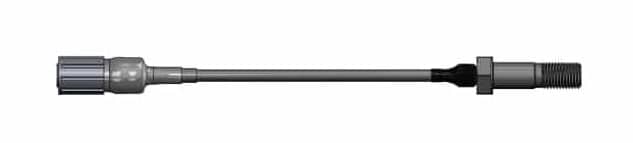
Explosive bolts, separation nuts and pyro bolts or studs are designed for missile, spacecraft and marine applications where rapid structure separation is demanded. Pressure actuated, ridge cut, piston actuated and hydrodynamic (pressure amplified) pyrotechnic explosive bolts are available in a wide range of sizes, configurations and tensile capacities from as little as 200 pounds to as much as 1,000,000 pounds). Our experts are here to support you in meeting your structural loading, envelope and environmental requirements and guide you on ways to mitigate shrapnel and products of combustion.
HOW EXPLOSIVE BOLTS WORK
They are used for fastening mating components or devices together to then allow rapid structural separation when commanded. Explosive bolts feature machined geometries to control the separation location and breaking strength. An explosive charge, located within a machined cavity in the bolt, or externally for Piston Bolts (Propulsive Bolts), provides the energetic stimulus required to cleanly separate the bolt at the predetermined break plane. Three of the most common explosive bolt designs we fabricate are the Standard Pressure Actuated Bolt, Ridge-Cut Bolt, and Piston Actuated Bolt (Propulsive Bolt); each of which exhibits unique advantages. Methods used for explosive bolt actuation will vary depending on the explosive bolts’ application requirements.
Our Explosive Actuated Bolts are designed to separate cleanly along a predetermined fracture plane. An explosive charge, located within a cavity in the bolt, provides the energetic stimulus required for bolt fracture. Explosive bolts are supplied in a wide range of sizes and configurations tailored to suite structural loading, envelope and environmental requirements. The bolts we supply range in tensile capacity from as little as 1400 pounds (.25 inch diameter) to as much as 557,000 pounds (5.75 inches diameter).
Standard Pressure Actuated Pyro Bolts provide maximum tensile and fatigue strength for the available envelope at minimum cost. Tensile, shock and hoop stresses developed from an internal detonation cause failure of the bolt along predetermined stress riser at the separation plane. Shrapnel and products of combustion are not contained.
Ridge-Cut Explosive Bolts employ shock wave mechanics to realize reduced shrapnel generation while maintaining high tensile strength. Explosive gasses are vented. The explosive load is pressed directly into the bore of the bolt. Shock waves emanating from the detonation pulse reflect from external surfaces to intersect and create tensile fracture along a conical path from the base of the bore to the edge of the notch on the outside diameter of the bolt.
Piston Actuated Pyrotechnic Bolts provide for full containment of products of combustion and for force amplification to permit severance of larger bolts. An explosively driven piston of large surface area impacts a hydraulic medium which fails the bolt due to combined hoop and shear stresses.
Hydrodynamic (Pressure Amplified) Pyro Bolts provide for containment of combustion and for amplification to permit severance of larger bolts. An explosively driven piston of large surface area impacts a hydraulic medium which fails the bolt due to combined hoop and shear stresses.
The most widely used application of an explosive bolt for an emergency escape system is the Canopy Actuator Release Bolt (CARB) on the F-16 Falcon. This bolt secures the canopy to the aircraft’s canopy actuator. During emergency escape in flight or on the ground the system is initiated and an explosive signal is routed to two high energy output ETL on each end of the bolt. The detonating output causes the bolt to fracture along two shear points releasing the canopy from the actuator. Firing of either ETL he end fitting will fracture the bolt at both fracture lines. The CARB is a Ridge-Cut bolt type.
Functions
Our pyrotechnic bolt applications include, but are not limited to, clamp release mechanisms, bulkhead and component release systems, rocket and missile stage separation, flight termination, along with jettison applications such as consumed or damaged structures, solid rocket booster (SRB) and satellite release.
Applications
Pyrotechnic Explosive Bolt designs are qualified and used for stage separation and release device for missile applications including Standard Missile 3, Range Extending Munitions Aero Packages, Solid Rocket Booster and main tank separation for the NASA shuttle, parachute deployment and mechanism release for weapon system.
PERFORMANCE CHARACTERISTICS
Input Stimulus, Typical: 3.5 amp (when electrically initiated)
TLX or SMDC input
4.5 AMP/4.1 millisecond
Tensile Strength: Up to 550,000 lbf
Operating Temperature: Designs as low as -65 °F and up to +270 °F
Separation Time, Typical: <10 milliseconds after application of All-Fire input stimulus <5 milliseconds at greater currents
Applicable Specifications: Qualified for: MIL-DTL-23659 Appendix A, Mil-C-83124, NASA NHB5300.4(1C), Mil-STD-1512
Hermesticity (pre-function): Designs that comply with 1 x 10⁻⁶ cc He/sec at 1 atm
Disclaimer: satsearch is not responsible for any mistakes on this page, although we do our best to ensure correctness. Please report any mistakes to us.
Last updated: 2020-06-08
Explosive Bolts

Export

