
 Satellites and subsystems > Thermal control equipment > Components > Optical Solar Reflectors (OSR) for GEO Satellites
Key highlights
Radiation-resistant
Key features
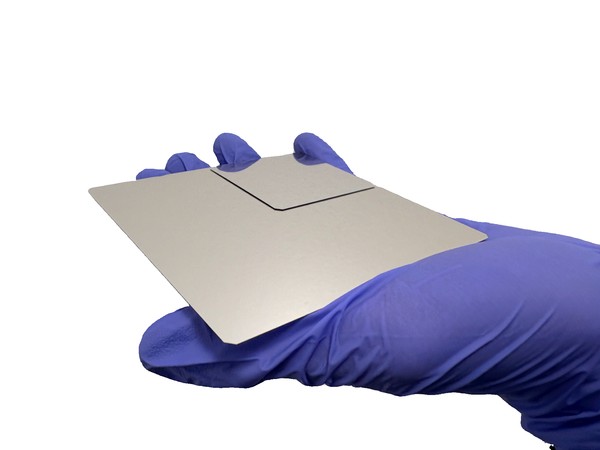
SQ-2 OSR tiles are made of cerium-doped borosilicate glasses that can sustain high optical transmission rates after prolonged exposure to UV, proton, and electron radiation in GEO conditions.
Customization
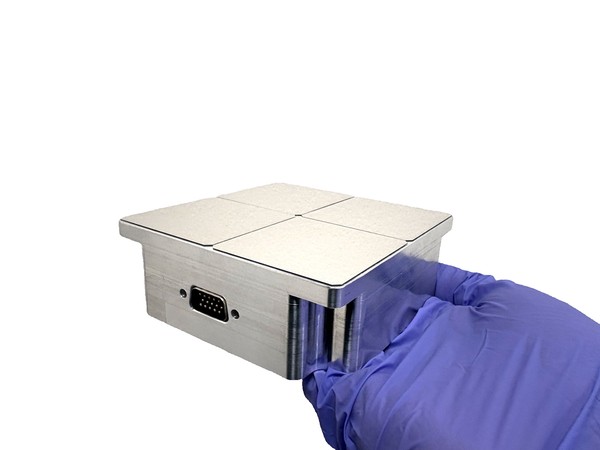
SQ-2 OSR tiles have a standard size of 2 x 2 inches (50 x 50 mm), 4 x 4 inches (100 x 100 mm), and a thickness of 150 µm.
Manufacturing
Producing at high volume (103 – 104 tiles)
Testing & qualification
Magnetron sputtering is one of the most widely used techniques for producing thin-film coatings. In this process, a dense plasma confined within a magnetic field generates a stable flux of sputtered aluminum atoms that deposit onto the borosilicate glass substrate. The resulting thin aluminum layer condenses uniformly on the borosilicate glass, providing a reliable, radiation-resistant OSR tile.
Disclaimer: satsearch is not responsible for any mistakes on this page, although we do our best to ensure correctness. Please report any mistakes to us.
Last updated: 2026-04-06
Optical Solar Reflectors (OSR) for GEO Satellites
Export

