
 Data acquisition and handling systems > Colossus Kestrel GPU Platform
Key highlights
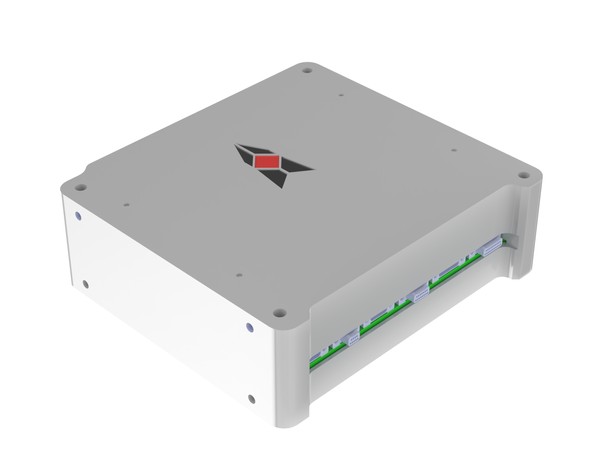
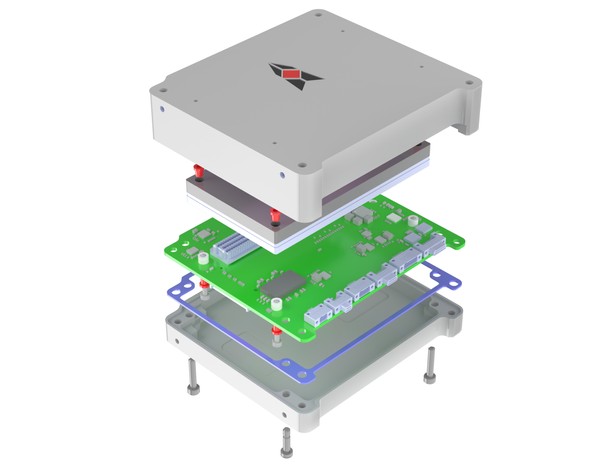
Run CUDA workloads in space with Colossus’ GPU Platforms Kestrel and Falcon. With the NVIDIA Jetson TX2i module at its core, the Colossus Kestrel adds massive parallel computing capability as well as high-performance CPUs. Colossus' design adds extra storage, including a standard microSD card and M.2 2280 SSD slot. By default, these are populated with validated, industrial-grade options. Gigabit Ethernet is available for high-speed connectivity, as well as other common interfaces.
Colossus' design provides protection and telemetry circuits for routine monitoring, as well as fault detection and isolation. Each subsystem is protected with a resettable eFuse circuit to mitigate the effects of radiation. Data is protected with Error Correction Codes (ECC) for RAM and the large capacity non-violate memory allows the storage of multiple copies of key files.
- AI/ML Compute Efficiency: Utilize unmatched parallel computing for efficient AI workloads in space applications.
- Autonomous Decision-Making: Onboard GPUs enable satellites to make immediate, mission-critical decisions without ground uplink delays.
- Onboard Data Processing: Filter and compress onboard data to optimize bandwidth by transmitting analyzed products instead of raw data.
Key features
- Mass Storage: Standard microSD card and M.2 2280 SSD slot populated with validated, industrial-grade options.
- Routine Monitoring: Protection and telemetry circuits for routine monitoring, as well as fault detection and isolation.
- High-Speed Connectivity: Gigabit ethernet is available for high-speed connectivity, as well as other common interfaces.
- Data Protection: Data is protected with Error Correction Codes (ECC) for RAM and the large capacity non-violate memory allows for the storage of multiple copies of key files.
- Radiation Tolerance: Subsystems protected with a resettable eFuse circuit to mitigate the effects of radiation
Customization
Hardware Modifications
The Kestrel GPU platforms include FPGAs, enabling semi-custom hardware configurations with optional add-on boards, adaptable for applications such as high-speed data transfer, onboard AI analysis, and specialized payload processing.
OS Configurations
Choose an OS configuration to meet your power and performance needs, customized at the Linux layer to ensure seamless integration with your mission’s unique protocols and requirements.
Software Pre-Integrations:
- TileBox Data Orchestration
- SkyServe Data Management
Flight heritage
The Colossus Kestrel achieved flight heritage March 4, 2024. https://spacenews.com/colossus-processor-gains-flight-heritage/
Testing & qualification
All Colossus Computing systems meet strict space-grade hardware standards to ensure reliability and performance in satellites. We address issues related to extreme temperatures, radiation resistance, and mechanical strength for optimal operation in space. Customizable testing for thermal, vibration, and EMI/EMC is available, with a default setting of GSFC-STD-7000 for Falcon 9 rideshare.
- Designed for 5-year low Earth orbit missions
- Temperature rated for -40°C to +60°C operating; -55°C to +85°C storage
- Multiple boot sectors for redundancy and software upgrades
- Comprehensive telemetry and monitoring
Customers
Loft Orbital chose Colossus GPUs as a compute resource to power the Virtual Missions Platform on the YAM-6 mission aboard the SpaceX Transporter-10 rideshare flight.
“Loft’s Virtual Mission service allows customers to access in-space data, and Colossus’s onboard processor technology helps enable this new paradigm for our customers,” Keith Becker, Loft Flight Products director of embedded systems, said in a statement.
Disclaimer: satsearch is not responsible for any mistakes on this page, although we do our best to ensure correctness. Please report any mistakes to us.
Last updated: 2026-02-13


Export

