
 Integrated ADCS > Turn-Key ADCS

Key highlights
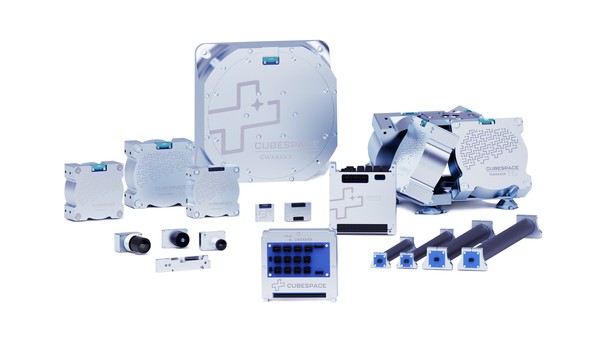
The ADCS of a satellite is a sophisticated and self-contained system. It demands precise timing and synchronization, robust fault detection, isolation, and recovery (FDIR) mechanisms, comprehensive power monitoring and switching, meticulous logging and telemetry handling, as well as accurate configuration and calibration of sensors. Additionally, it relies on complex mathematical models and algorithms. Over the past decade, our team has meticulously refined our Turn-Key ADCS to execute these tasks flawlessly; simplifying a complex subsystem into a customizable and scalable plug-and-play solution. The result is a user-friendly, flexible, and modular ADCS solution, that comes with a comprehensive manual and includes both integration and commissioning support.
Key features
• Proven estimator and control algorithms for all common mission scenarios - Including detumbling, sun-spin, earth target tracking, TDI Imaging with FMC, inter-satellite tracking, and many others.
• Integration of 3rd party sensors/actuators where required - Including reaction wheels, torquers, gyros, and star trackers, including the Sodern Auriga.
• Modular design, with either integrated or distributed sensors/actuators - Compact integrated systems for 3-6U, and distributed systems for flexible, larger satellite architectures including SmallSats.
• Optional integrated damping on reaction wheels - Reducing reaction wheel micro-vibrations and reducing jitter for high-accuracy EO applications.
• Custom mechanical and electrical interfaces - Enabling the ADCS to be adapted to any satellite bus architecture.
• Built-in FDIR mechanisms for robust operations - Including power monitoring and switching of sensors/actuators.
• GNSS integration into orbit propagation - GNSS position and velocity through comms interface, with option for direct GNSS or adaptive SGP4.
• Optional on-board power regulation - Requiring only a single V-BAT supply.
• PPS synchronization between GPS, OBC and Star Trackers - Either IO or differential (LVDS) PPS synchronization.
• On-board bootloader for in-orbit re-programmability - Including ADCS computer and all sensors and actuators.
• TLM logging in non-volatile memory - On-board TLM logging for later download by OBC.
• API library for OBC operating system - Full autogenerated software API library for easy integration with OBC software.
• Configurable mounting configuration for sensors/actuators - Software configurable sensor and actuator orientation for flexible mounting in satellite.
Flight heritage
10 Years of Flight Heritage
4000+components
350+ satellites controlled
250+ global clients
Testing & qualification
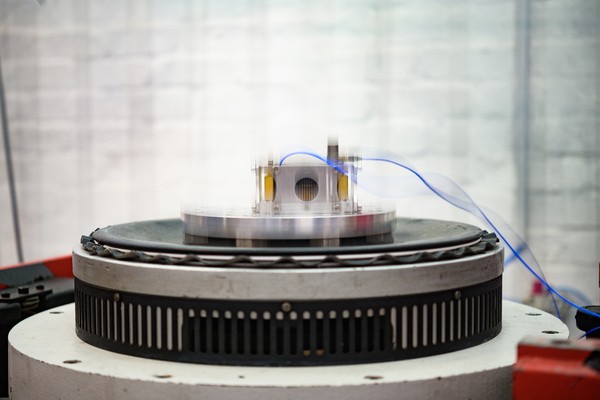
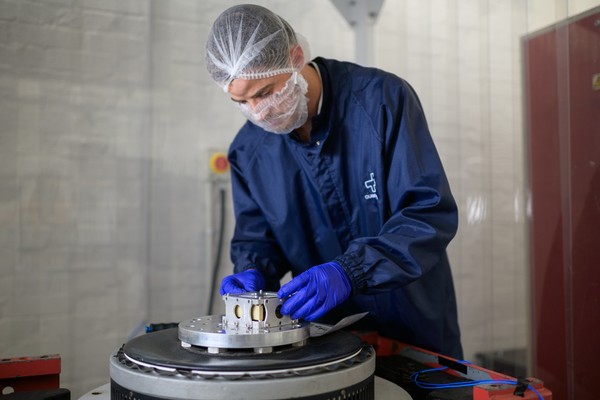
Our satellite subsystems’ manufacturing, assembly, integration, and testing adhere to international space standards. We design these subsystems with carefully selected components and subject them to rigorous testing under ESA’s ECSS and NASA’s GEVS standards, including radiation, vibration, shock, and thermal vacuum tests. Utilising in-house test equipment enables us to validate product performance efficiently and cost-effectively, ensuring reliable and high-quality products and services for our ambitious partners.
Disclaimer: satsearch is not responsible for any mistakes on this page, although we do our best to ensure correctness. Please report any mistakes to us.
Last updated: 2025-06-20


Export

