
 Satellite cameras > Owl 640 T Digital VIS-SWIR camera
Key highlights
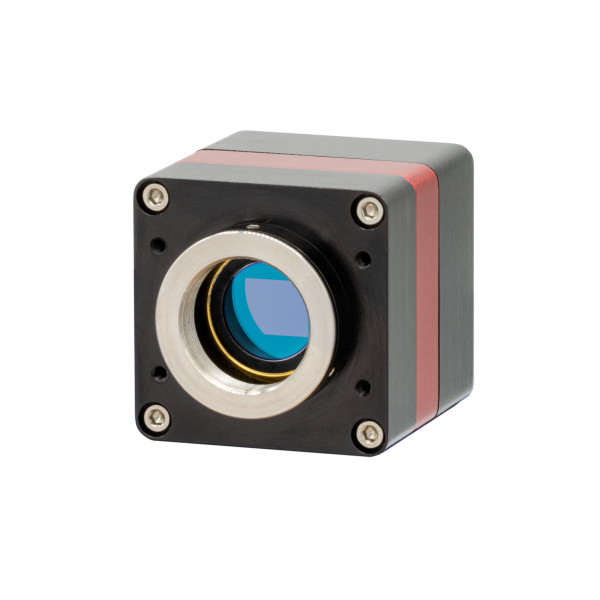
The Raptor Photonics Owl 640 T camera is the latest variant of the Owl 640 family, being a SWaP optimised ½" / VGA InGaAs sensor with a 10µm x 10µm pixel pitch. The Owl 640 T offers a spectral response from 0.6µm to 1.7µm and has less than 50 electrons readout noise, with a high intra-scene dynamic range of 69dB that enables simultaneous capture of bright and dark portions of a scene.
Available with a 12 bit Camera Link output, the Owl 640 T runs from 10 to 60Hz. The camera features an on-board Automated Gain Control (AGC), which enables the best contrast imaging from a dark to bright imaging scene, as well as an on-board intelligent 3 point Non Uniform Correction (NUC), providing high quality images. The Owl 640 T offers ½" optical design, taking advantage of a smaller and lighter lens. The camera is a suitable solution for the Mini UAV and Gimbal market and hand-held integrated systems.
As with all Raptor cameras, the Owl 640 T is ultra-compact and rugged. The camera uses a Thermometric cooler to stabilise the sensor temperature with no fan being used.
Key features of the Owl 640 T include:
- ½" Sensor Format | Better for optical design, ideal for OEM integration into Electro-Optic systems
- 10μm x 10μm Pixel Pitch | Compatible with VIS-SWIR illuminators, markers & pointers
- < 50 Electrons Readout Noise | Enables a high VIS-SWIR detection limit
- On-board Automated Gain Control (AGC) | Enables clear video in all light conditions
- On-board Intelligent 3-point NUC | Enables high quality photos
Applications of the Owl 640 M include:
- Surveillance
- 860, 1064 & 1550nm laser line detection
- Airborne and Ground Payload
- Hand-Held Systems
- Driving Vision Enhancement (DVE)
- Airborne EVS
- Vision enhancement
- Scientific
- Astronomy
- Beam Profiling
- Hyperspectral Imaging
- Semiconductor Inspection
- Solar Cell Inspection
- Thermography
This product is under the export control of UK government and maybe subject to an Single Individual export licence before shipment.
Disclaimer: satsearch is not responsible for any mistakes on this page, although we do our best to ensure correctness. Please report any mistakes to us.
Last updated: 2024-11-29
Owl 640 T Digital VIS-SWIR camera

Technical specs
HG: 40μs to 86.5ms
HG: 47 dB
1. dimension includes all connector parts on camera interface
2. dimension includes all connector parts on camera interface
3. dimension includes all connector parts on camera interface
4. measured in an ambient of 25°C with adequate heat sinking
5. optional filters available: low, high or bandpass
6. extended operating temperature range on request
Export

